 Skip to main content

Common Villa Renovation Mistakes to Avoid: Expert Guide
- July 22, 2026
- Zia Luxury
- 5:05 am
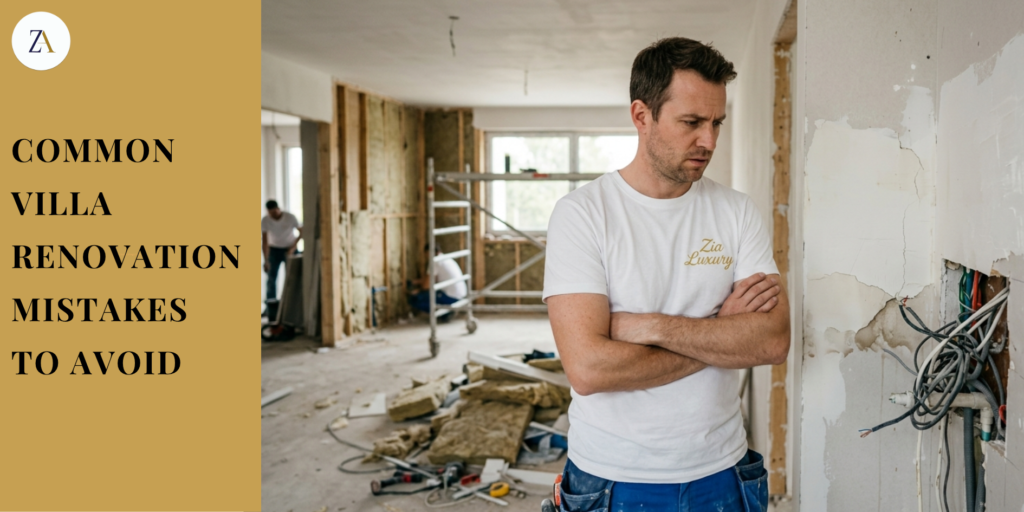
Renovating a villa in Dubai is one of the most rewarding investments a homeowner can make—but it’s also one of the easiest projects to get wrong. Between climate demands, developer regulations, and the sheer scale of luxury villa communities across the city, a small oversight at the planning stage can snowball into weeks of delays and unexpected costs.
At Zia Luxury, since 2019, we have executed more than 500 interior fit-out, renovation, and maintenance projects in the most sought-after communities in Dubai, ranging from Palm Jumeirah to Emirates Hills and Arabian Ranches to Dubai Hills. We’ve seen the same pitfalls repeat themselves over and over for homeowners who avoid them. Throughout the way, we’ve spotted the same mistakes again and again that homeowners avoid. This guide will outline the top 10 so that your renovation won’t experience any surprises and will be completed within the timeframe and budget.
Mistake 1: Not planning and creating a visual in 3D
There’s no costlier mistake to make when renovating your villa than starting without a plan. When homeowners begin to think about updating the kitchen, modernizing the majlis, or anything else similar, they have a general idea of what they want but don’t think about how these changes will affect the rest of the house.
A proper renovation plan should define:
- The full scope of work, room by room
- A realistic timeline with milestones
- 3D visuals or renderings so you can see the space before construction begins
- How structural, electrical, and plumbing changes interact
This 3D visualization process helps you visualize your renovation without making hasty decisions about materials or layouts and without resorting to a lot of “what if” and “oops” afterwards.
Mistake 2: Underestimating the True Cost
The reason why Dubai Villa Renovations are often more expensive than the homeowner has budgeted for isn’t that the villas are overcharged, but because some of the important expenses that are not included in the initial budget are being overlooked. These include demolition costs, permit fees, VAT, and material upgrades in the demolition process.
A more realistic approach:
- Build in a 15-20% contingency fund from day one
- Ask for a fully itemized, fixed-price quote—not a rough estimate
- Check if VAT is included or added separately
- Explain the situation if there are issues that are discovered during the renovation (old wiring, water damage, etc.)
The most effective way to protect from budget creep is to have fixed pricing and no hidden fees. A red flag is when your contractor does not provide an itemized quote before work.
Mistake 3: Ignoring Dubai Municipality, DEWA, and Community Approvals
This is a rare error made while renovating in the UAE, even by seasoned UAE homeowners. For many communities of villas in Dubai, particularly those run by the master developers such as Emaar, Nakheel or DAMAC, there’s a No Objection Certificate that must be obtained before any structural, exterior, or significant interior job.
Depending on the extent of your renovation, you might require:
- Approval from Dubai Municipality for changes in structure.
- DEWA clearance for electrical or plumbing modifications
- Community-specific approval if you’re altering the villa’s exterior or footprint
Not doing this will not only lead to fines, but it could also lead to a stop-work order during a renovation, which is a much bigger hassle and expense than waiting a few days for proper paperwork.
Mistake 4: Unlicensed or Unregistered Contractors
There are many Dubai contractors available in the Dubai renovation industry, but not all of them are legally registered to operate. If you pursue a job with an unlicensed firm, your investment, warranty, and insurance could be in jeopardy if there is a problem.
Before signing anything, verify:
- DED (Department of Economic Development) registration
- Dubai Municipality licensing
- Proof of insurance and bonding
- References or a visible portfolio of completed villa projects in Dubai
A trust signal—not a special request—is whether a legitimate, licensed company will readily share such information.
Mistake 5: Choosing Trends Over Dubai's Climate and Lifestyle
There’s an easy way to be swept up by the Pinterest-worthy design trends that, in reality, don’t work out for everyday use of a Dubai villa. Which materials and layouts are truly successful here are influenced by extreme heat, high humidity during certain times of the year, and sand exposure.
Some practical considerations often missed:
- Open-plan layouts need strong AC zoning to stay comfortable in summer
- Outdoor-facing materials need to withstand UV exposure without fading or warping
- Large glass installations require solar-control coatings to manage heat gain
- Pool and garden areas need drainage designed for occasional heavy rain
Good design in Dubai balances aesthetics with climate reality—not just what looks good in a photo.
Mistake 6: Changing Scope Mid-Project
One of the fastest ways to overrun budget and time is scope creep. Often it begins with a simple change—a different tile, an extra socket addition, a reconfiguration of a closet, etc.—and then continues to cascade through material ordering, labor scheduling and sometimes the whole sequence of the project.
To keep scope changes to a minimum:
- Complete design and material decisions before construction start-up
- Have a signed, written agreement with a definite end date
- When changes are necessary, ask for a written agreement of cost and time impact before moving forward.
A fixed contract and definite start and end date make projects more likely to avoid scope creep than loosely negotiated projects.
Mistake 7: Poor Communication and No Single Point of Contact
Many renovation frustrations don’t come from bad workmanship—they come from confusion. When homeowners are dealing with multiple foremen, subcontractors, or suppliers without one clear point of contact, small misunderstandings turn into major delays.
Look for:
- A single dedicated project manager assigned to your villa
- Scheduled weekly updates, not just responses when you ask
- A clear escalation path if something isn’t going as planned
One accountable project manager, rather than a rotating cast of subcontractors, makes an enormous difference in how smoothly a renovation runs.
Mistake 8: Using Cheap Materials That Can't Handle Dubai's Climate
Saving money on materials upfront often costs far more later. Dubai’s heat, sun exposure, and humidity are unusually tough on lower-grade finishes—cheap flooring warps, budget paint fades within a year, and low-quality sealants fail around pools and bathrooms.
Materials worth spending on:
- Outdoor finishes and coatings that resist damage from the sun.
- Flooring and outdoor tiling that resist damage from the weather.
- Ideal bathroom, kitchen, and pool waterproofing solution.
- Over time, the humidity will not cause corrosion on high-quality fixtures.
One of the neglected parts of Dubai renovation is to find suppliers that are familiar with the climate conditions of the Middle East and not a catalog from anywhere else in the world.
Mistake 9: DIY-ing Electrical, Plumbing, or Structural Work
DIY culture is popular, but there’s a hard line in villa renovations where it becomes a genuine safety and legal risk. Electrical, plumbing, and structural work in the UAE must be handled by licensed professionals—not just for quality, but for compliance with DEWA and Dubai Municipality safety regulations.
Attempting these tasks yourself, or hiring unqualified labor to cut costs, can:
- Void your insurance coverage
- Create fire or flooding hazards
- Lead to results that must be redone by licensed professionals, for additional expense
Cosmetic features (such as painting a feature wall) are okay to do yourself. Wiring, water lines and load-bearing walls should always be left to the certified tradespeople.
Mistake 10: Overlooking Post-Renovation Snagging and Aftercare
The renovation is not completed at handover, it is completed when all the defects are detected and fixed. A lot of people do not perform a final inspection and then find that something is broken or cracked weeks later, and it is difficult to obtain the service.
Before signing off:
- Request a full snagging inspection before final handover
- Confirm what’s covered under your Defects Liability Period (DLP)
- Ask whether ongoing maintenance or an Annual Maintenance Contract (AMC) is available
A renovation partner who includes a defects liability period—typically 12 months—and offers snagging-free handover gives you real protection instead of leaving you to chase repairs on your own.
Frequently Asked Question
It depends on the scope—structural changes, exterior modifications, and major electrical or plumbing work typically require Dubai Municipality and DEWA approval. Community-specific NOCs may also apply.
Most full villa renovations take between 8 and 20 weeks, depending on size and scope. A licensed contractor should give you a binding timeline before work starts.
Check for DED registration, Dubai Municipality licensing, and proof of insurance. A legitimate company will share this information without hesitation.
Budget overruns usually come from missing contingency funds, unclear VAT terms, or mid-project scope changes. Fixed, itemized pricing upfront helps avoid this.
A DLP is a set window, often 12 months, where the contractor fixes any post-renovation defects at no extra cost. It protects you after handover, not just during construction.
Conclusion
Villa restoration in Dubai isn’t just about design ideas; it’s about the regulatory processes, choosing materials suitable for the local climate, hiring licensed experts, and the kind of coordination that can be underestimated. The only thing avoiding these ten mistakes is working with a partner that will cover the full scope of the process from 3D design to fixed-price execution, to post-handover aftercare, under one accountable team.
At Zia Luxury, every villa renovation includes a detailed site consultation, 3D visuals before construction begins, a fixed itemized quote, a dedicated project manager, and 12 months of defects liability aftercare—so nothing on this list becomes your problem. If you’re planning a villa renovation anywhere in Dubai, get in touch for a free consultation, and let’s map out your project the right way from day one.
