 Skip to main content

Top Luxury Interior Design Trends Dubai for 2026 Homes
- July 18, 2026
- Zia Luxury
- 7:42 am
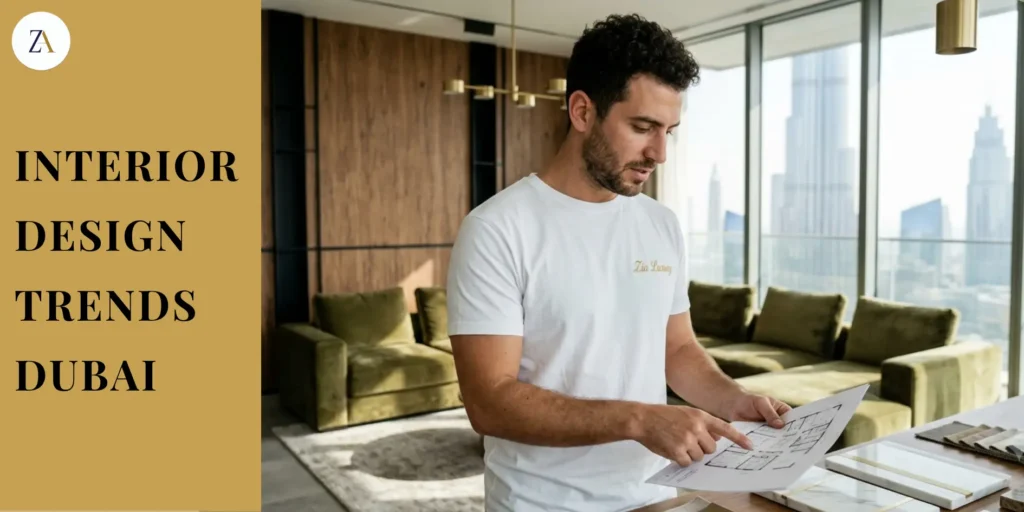
Dubai’s skyline is constantly changing, and so are the lifestyles of its residents within their homes. The direction of the city is quickly shifting from over the top to less over the top, with rooms appearing more individual, green, and simple than ever.
Whether you’re a Villa In Palm Jumeirah, a Penthouse In Business Bay or an apartment in Dubai Marina, there is more to it than just knowing about these trends. It’s about protecting asset value, improving the quality of your life, and making informed decisions prior to investing in a renovation or fit-out. What’s really set to define luxury interior spaces in Dubai this year—and how you can have some in your home.
Biophilic & Sustainable Luxury Is No Longer Optional
Now, building sustainability is not a choice but an expectation for Dubai’s luxury homes. Biophilic design allows homeowners to enjoy open, natural and comfortable spaces without sacrificing style and glamour.
In 2026, it looks as if
- Living walls and indoor gardens are incorporated into the living space.
- Naturally stone-walled with reclaimed wood details.
- From floor to ceiling, energy-saving large windows allow natural light to enter.
- Efficient water use and heating and cooling options.
But the allure here goes beyond being eco-friendly. The homes built this way really are more peaceful and healthy to live in, with improved air quality and natural light taking the brunt of the work. Villa owners find this trend to work well with their landscaping upgrades—a well-designed outdoor space continues the trend beyond the house’s walls.
Warm, Earthy Palettes Are Replacing Cool Neutrals
The Dubai interior design for years was dominated by greys, whites, and cool minimalism. That’s shifting. There’s a return to warm colors in 2026, including terracotta, sand, burnt orange, and deep browns, which are all standing in contrast to the neutral color schemes that dominated the previous ten years.
- It’s not necessarily the case that every wall should be a strong colour. Layering warmth is by:
- Earthing accent walls
- Warm colors with textiles such as velvet cushions or wool throws
- Furniture made from wood that has a natural grain visible.
- Brass or gold fixtures that pick up warm undertones in lighting
Done well, warm palettes make large villa spaces feel more intimate and apartments feel less clinical—without sacrificing the polish that luxury interiors demand.
Contemporary Middle Eastern Fusion
One of the most distinctive trends in Dubai’s 2026 interior scene is a return to regional identity—but reinterpreted for modern living. Rather than heavy traditional motifs, designers are working in subtler references:
- Mashrabiya-inspired screens are used as room dividers or lighting features.
- Decorative geometric designs on flooring, ceiling or accent tiles.
- Textured Wall finishes: Desert shades and materials.
- Natural stone accents that still pay homage to the region without being themed.
The trend, which is gaining momentum significantly in luxury villas in Emirates Hills and Arabian Ranches, is to create an interior that is clearly Dubai and not just international luxury.
Art Deco Revival, Modernized
Art Deco is having a real moment in 2026—but not in its original, ornate form. What’s trending is a leaner, more restrained version: bold geometric shapes, rich materials, and confident colour choices, balanced against clean modern lines so the look doesn’t tip into pastiche.
Expect to see this in:
- Statement mirrors and mirrored furniture with geometric framing
- Fluted panelling on cabinetry and feature walls
- Brass, marble and dark wood combinations
- Discreetly incorporating smart lighting in Art Deco fixtures is layered.
It’s a style that looks great in photos and is perfect for the formal living and dining rooms.
Smart Home Integration Without Losing Aesthetic Flow
Smart home technology in Dubai is not a novelty anymore; it’s a given. The only thing that has changed is the way that it’s being integrated. Invisible automation is the growing desire of homeowners—lighting, climate controls, security and entertainment systems that do what they’re told, whether by voice or an app, but not by… panels or cumbersome hardware.
The 2026 approach favours:
- Concealed wiring and built-in speaker systems
- Automated blinds and lighting scenes tied to daily routines
- Climate control zoned by room, managed from a single interface
- Security systems integrated into design elements rather than bolted on
Getting this right requires planning smart home infrastructure at the design stage, not retrofitting it after the fact—which is where working with an experienced fitout team matters more than most homeowners expect.
Statement Lighting and Bespoke Furnishings
Off-the-shelf furniture is losing its appeal among Dubai’s luxury homeowners. Personalization is the driving force in 2026—pieces designed specifically for the space, the client’s lifestyle, and nowhere else.
This shows up as:
- Custom dining tables built from specific wood types or stone slabs
- Sculptural chandeliers designed as the room’s focal point
- Sofas and cabinetry tailored to exact room dimensions
- Individuality in decorating with handmade items
A custom chandelier or even a customized kitchen island can add more of a home’s soul than any trend list can describe in text—and it is often the particular, the detail that makes a place with a definite home’s voice.
Indoor-Outdoor Living for Dubai's Climate
The boundary between indoor and outdoor living has become increasingly indistinct in the creation of luxury villas in Dubai, given the environment in which it’s mostly lived in the area. Homeowners desire spaces that seamlessly connect directly to the living room, garden, pool deck or outdoor majlis.
Key elements driving this trend:
- Consistent flooring materials carried from the interior to the exterior
- Sliding or folding glass doors that open living rooms onto gardens
- Outdoor kitchens and dining areas positioned near pools
- Infinity pools and smart pool automation as design features, not afterthoughts
This is where interior design, landscaping, and pool design genuinely need to work as one coordinated plan rather than three separate projects—otherwise the “seamless” effect never quite lands.
How Much Do These Trends Cost to Implement in Dubai?
This is the part most trend articles skip—but it’s usually the first question homeowners actually have.
- Cosmetic updates (colour palette, textiles, lighting swaps): typically the most affordable entry point, achievable within weeks rather than months
- Mid-tier upgrades (custom furniture pieces, smart home basics, accent walls with Middle Eastern or Art Deco detailing): a moderate investment, usually completed within an apartment fitout timeline of 4–8 weeks
- Full villa transformations (biophilic architecture changes, indoor-outdoor merging, integrated smart systems, bespoke furnishings throughout): the most significant investment, generally aligning with villa fitout timelines of 8–20 weeks
The right approach depends on whether you’re refreshing a few rooms or reimagining the entire property — and a fixed, itemized quote upfront should tell you exactly where your budget is going, with no surprises later.
Choosing the Right Interior Fitout Partner for These Trends
None of these trends deliver their full impact without the right execution. Dubai’s luxury interior fitout market is crowded, so the details of who you work with matter as much as the ideas themselves.
Look for a partner that offers:
- 3D visualization before any work begins — so you can see the design fully realized before committing
- Fixed, itemised pricing — no hidden costs added mid-project
- Licensing and insurance — DED registration and Dubai Municipality approval are non-negotiable for any serious fitout company
- A structured, binding timeline — with a dedicated project manager overseeing execution
- Aftercare — a defects liability period post-handover, so any snags are resolved at no extra cost
Zia Luxury has delivered 500+ interior fitout, renovation, and property maintenance projects across Dubai since 2019, working with developers including Emaar, Nakheel, and DAMAC, and maintaining a 4.9 Google rating from clients across Palm Jumeirah, Emirates Hills, Downtown Dubai, and beyond. Every project follows the same six-step process — from initial consultation and 3D visuals through to fixed contracts and a 12-month aftercare guarantee — so trends like these are executed with precision, not guesswork.
Frequently Asked Question
Biophilic and sustainable design is leading the pack, with warm, earthy palettes and Middle Eastern fusion is closing behind. Together, they reflect a shift toward interiors that feel personal and connected to nature.
Apartment fitouts typically take 4–8 weeks, while full villa renovations range from 8–20 weeks, depending on scope. Commercial fitouts usually fall between 6–16 weeks.
Yes—cosmetic changes like palette updates, textiles, lighting, and select bespoke pieces can bring several trends into your home without touching the structure. A full renovation is only needed for major layout or architectural changes.
Absolutely, especially if planned at the design stage rather than retrofitted later. It adds convenience and resale value while keeping the aesthetic clean when integrated properly from the start.
Check for DED registration, Dubai Municipality licensing, and insurance coverage. Genuine companies will also offer fixed pricing, 3D visuals before work begins, and a clear aftercare policy post-handover.
Conclusion
These Dubai interior design trends for 2026 are not about following a recipe; it’s about curating a space that is eco-friendly, personal, and truly resonates with the way people live today. A good execution partner can make or break a trend, which is why it can make all the difference to your photo and your life.
Looking to incorporate these trends in your house? To experience your dream home, use the 3D visuals to bring your vision to life before any work is done. Get a free consultation with Zia Luxury today.

2 Responses