

Defects Liability Period UAE: What Owners Should Know
- August 15, 2026
- Zia Luxury
- 5:33 am
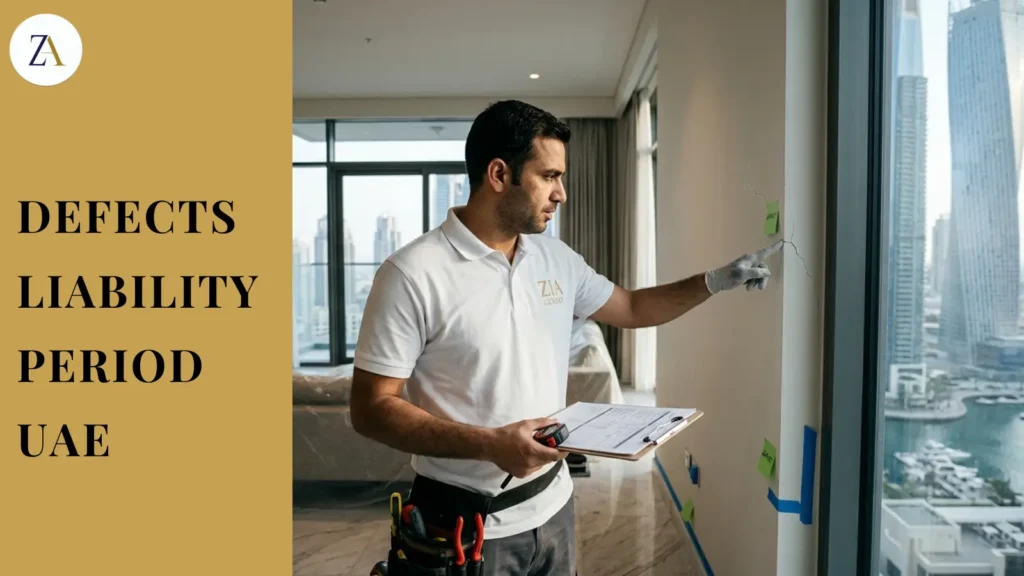
While it’s exciting to purchase a property in the UAE, there’s always a surprise lurking when little problems emerge once you move in—a hairline crack in the wall, a leaking tap, an air conditioner unit that doesn’t cool up as much or as quickly as anticipated. However, before you grab your own toolbox or your wallet, there is something you should know that applies to every owner—the Defects Liability Period (DLP).
This guide aims to explain what DLP is in the UAE, how long it lasts, what it covers and what you can do if your developer or contractor doesn’t put things right.
What Is the Defects Liability Period (DLP) in the UAE?
The Defects Liability Period is a specific period of time from handover that the developer/contractor is legally obliged to rectify a defect free from the owner. It is not a favour but a contractual and, in most cases, legally binding requirement under your Sales and Purchase Agreement (SPA) or renovation contract.
In simple terms: if something breaks due to poor workmanship or low-quality materials in the DLP window, then you are not paying for it, the developer or the contractor.
Legal Basis: RERA and UAE Regulations on DLP
The DLP isn’t just industry custom—it’s rooted in UAE real estate regulation. According to Dubai’s Real Estate Regulatory Agency (RERA) under Law No. 3 of 2017 on Ownership Associations, the developers have to continue holding themselves liable for defects in construction for a stipulated time after handover, in addition to general obligations prescribed under the UAE’s Civil Transactions Law.
Here’s why this matters for you as an owner:
- Your DLP obligations are typically written directly into your SPA or handover contract
- RERA-registered developers are expected to honor these timelines
- If a developer refuses to comply, owners will have a documented legal basis to escalate the situation.
Before handover, always read the defect liability clause for your SPA and know that it differs from “standard practice” and that durations and exclusions differ from developer to developer.
How Long Does DLP Last in the UAE?
The average DLP for residential & commercial properties in the UAE is 6-12 months from the date of handover, and the most common is 12 months for villas and apartments. Others go further than this, covering structural defects up to 10 years, in keeping with the wider UAE construction liability practices.
There are a couple of things to note:
- The clock begins from the handover date and not your move-in date.
- Off-plan and ready properties can have different DLP terms—always confirm in writing
- Renovation and fit-out projects typically carry their own defects liability period, separate from the original developer’s DLP
What's Covered Under DLP
The developer or the contractor will usually correct the following defects during the defects liability period, at no cost:
- Structural defects—cracks in the walls, ceiling or foundation
- The issues that are related to plumbing and electricity. Plumbing and electrical problems.
- HVAC and air conditioning system failures
- Waterproofing failures and water leaks are potential issues to watch out for.
- Tiling, painting, carpentry, and plastering not done properly
- Worn or damaged parts like locks, windows, doors, switches, and sockets.
- Health and safety issues—non-working fire alarms, wobbly railings, etc.
What's NOT Covered Under DLP
Not every issue that appears after handover qualifies. Owners should be aware that DLP typically excludes:
- The normal wearing out that occurs as a result of daily use.
- Damage resulting from the owner, tenants or third parties.
- Changes/Adaptations after handover
- The problems that result from failure to maintain regularly
- Damage resulting from external or environmental factors (e.g. floods, very hot or cold weather)
Being aware of these exclusions upfront ensures that you don’t face conflicts and have reasonable expectations.
DLP vs Warranty vs Maintenance Period
The three of these terms are often misinterpreted, but they are used differently and refer to different parties:
Aspect | Defects Liability Period (DLP) | Warranty | Maintenance Period |
Who’s responsible | Developer / main contractor | Manufacturer of equipment/fixtures | Owner or maintenance company |
What it covers | Overall construction defects | Specific appliances or systems | General upkeep, not defects |
Typical duration | 6–12 months from handover | Varies, often longer than DLP | Ongoing, owner’s responsibility |
Cost to owner | Free (developer’s obligation) | Free within warranty terms | Owner pays (unless under AMC) |
Knowing this difference prevents you from chasing the wrong party — or wasting time on a claim to a developer that isn’t obligated to respond.
How Owners Should Raise a DLP Claim: Step-by-Step
- Inspect thoroughly and early. Don’t wait until month 11. Walk through every room, test every fixture, and check for water stains, cracks, or misalignment as soon as you move in.
- Document everything. Take dated photos and videos of every defect you find—this becomes your evidence if disputes arise later.
- Submit a written defect notice. Email or use the developer’s official handover portal. Verbal complaints alone rarely hold up.
- Reference your SPA clause. Quote the specific defects-and-liabilities terms from your contract to support your claim.
- Set a follow-up schedule. Don’t let the developer go silent—follow up every 1–2 weeks until resolution.
- Keep a paper trail. Save every email, WhatsApp message, and call log related to the defect and its resolution.
What Happens If the Developer Delays or Refuses Repairs?
This is where many owners get stuck — and where most online guides stop short of giving real answers. If your developer isn’t responding within a reasonable timeframe:
- Escalate formally — send a written reminder referencing your original notice and the DLP clause
- File a complaint with RERA if the developer remains unresponsive or denies a valid claim
- Get an independent assessment — a third-party inspection report strengthens your position and gives you documented proof of the defect’s cause and severity
- Consult a real estate lawyer for high-value or structural disputes that aren’t resolving through normal channels
Acting early — ideally in the first few months of your DLP — gives you far more leverage than waiting until the period is about to expire.
How Zia Luxury Supports Owners After Handover
At Zia Luxury, we understand DLP from the other side of the table too—as a DED-registered, Dubai Municipality-licensed interior fit-out and renovation company with 500+ projects delivered across Dubai since 2019, every project we hand over comes with a 12-month defects liability period, with snags addressed at zero cost to the client.
If you’re renovating a property that’s still within its original developer DLP, or if you want a professional second opinion before your own fit-out warranty expires, our team can:
- Identify defects that may still fall under your developer’s DLP obligation before you renovate
- Handle post-handover snags on our own delivered fit-out and renovation projects at no extra charge
- Provide fixed-price, itemized quotes with zero hidden costs for any repair or renovation work outside DLP coverage
We don’t disappear after handover—our 24/7 support and Annual Maintenance Contracts (AMC) mean your property stays protected long after any defects liability period ends.
Frequently Asked Question
Yes, they both have a defects liability period, but this may differ. Be sure to check the specific coverage and the exact time of the SPA or handover contract.
No, in general the DLP is set by the contract, and it is best to report any defect as early as possible, before the end of the period.
After DLP, the owner is generally responsible for repair expenses, unless the problem is covered by a manufacturer's warranty or a maintenance agreement.
The concept is the same throughout the UAE, but the specific length of time and enforcement of this may differ slightly between emirate and developer, so please check your contract.
Overall construction defects are covered by DLP and are the developer's responsibility, whereas a warranty will cover specific appliances or systems and is typically offered by the manufacturer.
Conclusion
The Defects Liability Period is one of the best pieces of protection a UAE property owner has—provided he or she knows about it, documents any defects on time, and follows up regularly. Knowing what rights you have when you sell your building to a developer, whether it is for new construction or refurbishment, could save you time and money.
Whether you are dealing with a problem after a handover or you are thinking of your next renovation project in Dubai, Zia Luxury is there to help, from independent advice to a guarantee of workmanship for every project we work on at fixed prices. Get in touch for a free consultation.