

DEWA Approval Renovation Dubai – Complete Guide
- August 8, 2026
- Zia Luxury
- 7:41 am
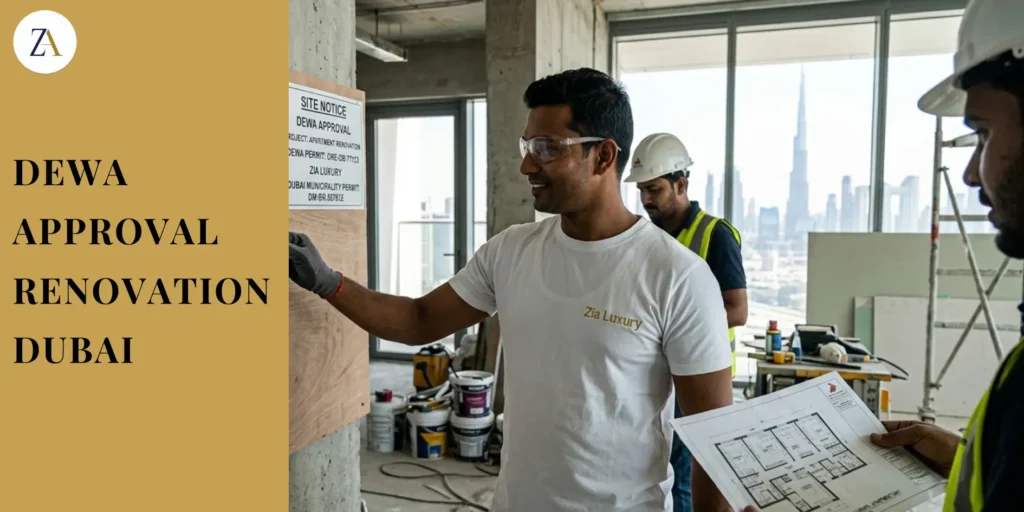
If you’re planning any renovation in Dubai that touches electricity, water, or AC systems, DEWA approval isn’t optional paperwork you can skip and sort out later. It is obligatory, and if you do not obtain it, your project could be halted in the middle, and you could receive fines that exceed the time you saved by not bothering with it. Residents of Emirates Hills villas, JBR apartments, and business properties in Business Bay are just a few of the Dubai renovation locations where DEWA is at the heart of all approvals.
So you won’t have any unpleasant surprises when your renovation begins, this guide explains exactly what you can expect from DEWA approval, when it is required, what you need to prepare, how the process works step by step, and the costs involved.
What is DEWA Approval and why is it necessary?
DEWA (Dubai Electricity and Water Authority) is the government agency that provides and regulates electricity and water in Dubai. The approval from DEWA is a statement of safety, technical, and efficiency requirements for the property before any electrical or water modification is put into action.
This isn’t a formality. The building code in Dubai stipulates that DEWA must sign off on any work that alters electrical loads, rewires circuits, introduces additional water connections, or alters the plumbing layout in the building, as it can lead to fire, water damage, and electrical system failures, which will impact not only your unit but the entire building or community.
To be specific, for renovation projects, the Dubai Municipality (or Trakhees/DDA, depending on the zone) and Dubai Civil Defence clearances also apply over and above DEWA clearance. All three of these approvals indicate that your renovation is structurally safe, fire safe, and utility compliant.
When Do You Need DEWA Approval for Renovation?
Not every renovation task triggers a DEWA review. Cosmetic changes are usually exempt, but anything involving electrical or water systems is not. Please note that if your renovation involves any of the following, you will need approval from DEWA:
Increase or upgrade electrical demand (new equipment, increased AC systems, new circuits).
- Moving or connecting water supplies (kitchen/bathroom)
- Rewiring or replacement of the electrical distribution board.
- Adding or modifying plumbing installation or drainage system
- Any mechanical, electrical, or plumbing changes included in a structural change of use or fit-out.
- Connecting new utility points after a villa extension or additional room
Simple work like repainting, replacing flooring, or swapping cabinet fronts in the same position generally doesn’t need DEWA involvement—but it’s always worth confirming with your building management or consultant before assuming you’re exempt.
Documents Required for DEWA Approval
Before you can submit anything to DEWA, your consultant or contractor needs to prepare a documentation set. This typically includes:
- Trade license copy (of the contractor/consultant handling submission)
- Document of title or tenancy contract for the land.
- A No Objection Certificate (NOC) from the Building Owner, Developer, or the Community Management.
- Architectural and MEP drawings with detailed layouts of the proposed electrical, water and other services
- Reports of electrical modifications, including load calculations. Load calculation reports on electrical modifications.
- Emirates ID or passport copy of the property owner (for individual applicants)
If the renovation has an impact on fire suppression and/or safety systems, contact Civil Defence NOC.
The top reason for DEWA applications to be delayed or rejected is because of incomplete documentation. It’s weeks, if not months, of time saved the first time it’s done right.
Step-by-Step DEWA Approval Process
The process normally goes like this:
Step 1: Secure your building/community NOC first.
You must have the approval of your building management, developer, or the Community Authority that governs the building before DEWA’s involvement, indicating that they do not have any objections to the scheme of work.
Step 2: Prepare technical drawings.
In-depth Electrical and Water System drawings are prepared by a qualified consultant or engineer, which include water load calculation and water network plans that satisfy DEWA technical requirements.
Step 3: Submit the application.
The drawings and supporting documents are submitted by your consultant either directly to DEWA or through a combined submission, which is submitted to DEWA for utility review via the Dubai Municipality/Trakhees submission portal.
Step 4: DEWA technical review.
DEWA engineers review drawings to verify they meet energy efficiency requirements, safe water connection and wiring standards, and load limits. If anything doesn’t meet the standard, the application is sent back for revision.
Step 5: Approval and installation.
After the design is approved, your contractor can start on the actual electrical and plumbing installation, working according to the approved drawings.
Step 6: Inspection and testing.
Once installed, DEWA (or the authorized inspector) makes on-site checks and safety tests to ensure that it is in line with the approved design and operates safely.
Step 7: Final connection.
Upon successful inspection, DEWA turns on or restores the utility service, typically in 24 to 48 hours after inspection.
The most frequent—and expensive—error homeowners and contractors make is installing before drawing approval is received.
Villa vs. Apartment vs. Commercial: How the Process Differs
- Villas: Usually involve a direct DEWA submission alongside Dubai Municipality or Trakhees, especially for larger MEP changes. Community developers like Emaar or Nakheel add their own NOC step before Municipality submission.
- Apartments: Usually, DEWA approval is included in the building management NOC and Dubai Municipality (or Trakhees in the case of freehold towers) review. Typically, building management sign-off occurs before apartment sign-off, due to sharing utility infrastructure.
- Commercial spaces: Detailed DEWA review may be required for fit-outs for offices, retail, or restaurants and is often accompanied by Dubai Civil Defence approval for fire safety compliance.
While the heart of the DEWA process remains consistent in all three, supporting NOCs and timelines vary based on the property type.
Timeline: How Long Does DEWA Approval Take?
The processing time is dependent on project size and the level of documentation provided:
- For smaller renovations (apartments, normal upgrading of villas): 3-7 working days.
- Large commercial projects (Malls, large shopping centers, office buildings): up to 4 to 6 weeks
- Large or complex projects (Multi-floor buildings, Industrial Units, Major Villa Extensions): 3 to 6 weeks
Utility activation is typically within 24-48 hours of approval and inspection. The greatest cause of delay is not DEWA’s processing time; it’s the incomplete or incorrect drawings being returned for correction.
Cost and Fees Involved
Renovating without DEWA sign-off isn’t a grey area—it’s a compliance violation with real consequences:
- Fines that can start around AED 10,000 and climb significantly depending on severity
- Immediate stop-work orders if authorities detect unapproved work on-site
- Forced restoration of the property to its original condition at your own cost
- Complications when selling or refinancing the property
- Voided insurance coverage if damage occurs from unapproved electrical or plumbing work
Beyond the financial risk, unapproved electrical or water modifications genuinely endanger the property and the people in it. This is exactly why the approval step exists—not as bureaucracy, but as a safety net.
What Happens If You Skip DEWA Approval
Renovating without DEWA sign-off isn’t a grey area—it’s a compliance violation with real consequences:
- Fines that can start around AED 10,000 and climb significantly depending on severity
- Immediate stop-work orders if authorities detect unapproved work on-site
- Forced restoration of the property to its original condition at your own cost
- Complications when selling or refinancing the property
- Voided insurance coverage if damage occurs from unapproved electrical or plumbing work
Beyond the financial risk, unapproved electrical or water modifications genuinely endanger the property and the people in it. This is exactly why the approval step exists—not as bureaucracy, but as a safety net.
How Zia Luxury Simplifies DEWA Approval for You
At Zia Luxury, we handle the entire renovation journey—including the approval process—as part of our turnkey service. As a DED-registered and Dubai Municipality-licensed company, we prepare compliant drawings, manage NOC and DEWA submissions, and coordinate inspections so you’re never left chasing paperwork between authorities.
Everything is priced up and itemized (no hidden approval surprises), fully visualized in 3D before any construction work begins, a dedicated project manager manages your renovation from start to finish, and a project manager is available for a twelve-month aftercare period after the work has been completed. Whether you are renovating your villa in Palm Jumeirah or fitting out your apartment in JBR, we ensure there are no compromises in meeting standards throughout the entire renovation process.
Frequently Asked Question
Only if the work involves electrical or water system changes. Cosmetic upgrades like painting or flooring usually don't require DEWA involvement.
Small residential renovations typically take 3 to 7 working days, while larger projects with major MEP changes can take several weeks.
No. Starting work without approval is a compliance violation and can lead to fines, stop-work orders, and forced restoration costs.
DEWA approval specifically covers electrical and water system safety, while Dubai Municipality approval covers the overall structural and design compliance of the renovation.
Yes. We manage the entire documentation, submission, and inspection process as part of our turnkey renovation service, so you don't have to deal with authorities directly.
Conclusion
The approval from DEWA need not be the stumbling block in your renovation. Once documented and a team is familiar with the process, it’s just another step that proceeds smoothly in the background.
Get in touch with Zia Luxury today for a free consultation — we’ll assess your renovation scope, handle your DEWA and Municipality approvals, and get your project moving without the paperwork headaches.