

Materials for Luxury Villa Interiors Dubai | Zia Luxury
- August 25, 2026
- Zia Luxury
- 5:20 am
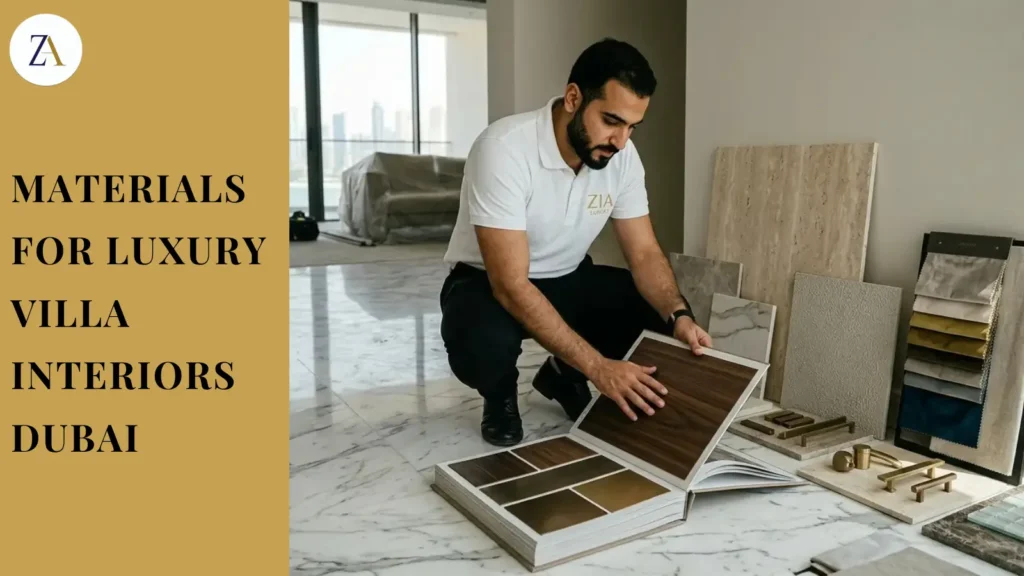
Pick the wrong material for a Dubai villa, and you won’t find out for a year or two. The marble looks flawless in the showroom. The wood samples feel perfect in your hand. Then summer hits, humidity creeps in through the coastal air, and suddenly that “premium” finish is cracking, warping, or fading under six months of direct sun through your floor-to-ceiling windows.
We’ve worked on more than 500 villa interiors across Dubai since 2019—Palm Jumeirah, Emirates Hills, Dubai Hills, JBR, you name it. And if there’s one thing we’ve learned, it’s that material selection isn’t really about taste. It’s about knowing which materials survive this climate and still look expensive five years later. Here’s what we’ve learned works.
Why Dubai's Climate Changes Everything
Most material guides written for cooler countries simply don’t apply here. It’s best to know what a finish is battling in a Dubai home before you fall in love with it.
- Punishing heat: Summer temperatures are well above 40°C for months—expect that to cause stress on adhesives, paints, and untreated wood.
- Coastal humidity: In Palm Jumeirah, JBR, and Dubai Marina, the salty air will cause cheap metal fittings to corrode and solid wood that hasn’t been treated to warp.
- Constant UV: The lovely floor-to-ceiling windows you like have another drawback: They get the sun’s rays indoors, and they can cause fabrics to fade and finishes to dull more quickly than you would expect.
- Dust: Fine sand and dust, which over time damage soft, unsealed surfaces, are a problem in inland communities such as Emirates Hills and Arabian Ranches.
The rule is as straightforward as it gets: what looks great in a Milan showroom doesn’t necessarily look great in a Dubai living room. Climate must be considered as a key factor in a decision, rather than an afterthought.
The Best Materials for Luxury Villa Interiors
What's the best flooring for a Dubai villa?
Honestly, it comes down to two families—natural stone and large-format porcelain. Both stay cool underfoot and shrug off heat far better than most alternatives.
- Marble remains the go-to option for the classic reason. There is no doubt that Calacatta and Statuario varieties are more elegant and can truly add a touch to any entrance hall, living room, or staircase. Yes, it should be sealed from time to time, but with proper sealing, it can last for decades.
- Travertine is warm and rustic like marble, but it actually works well for indoor and outdoor applications. Travertine is a good choice to connect indoor and outdoor spaces, particularly if your villa has a strong combination of these areas, such as terraces leading in from the living room.
- Quartzite offers you that marble-looking beauty, but it’s much tougher and more resistant to scratches and heat. Great to have if you have children, pets or a busy household.
- Large-format porcelain has come a long way. It mimics marble and concrete convincingly now, needs almost no upkeep, and holds up against sun and moisture far better than people assume. A lot of our clients end up choosing this once they see how little maintenance it actually needs.
Engineered wood or solid wood — which one actually works here?
Not close at all when it comes to engineered wood for flooring. It has greater resistance to humidity changes in the air-conditioned halls of the villa than solid wood and retains the natural warmth that people desire.
- Engineered wood doesn’t suffer from the warping and swelling that can happen to solid wood in humid coastal homes.
- Still, however, solid wood should not be overlooked—walnut, oak, and ash are great for feature walls and bespoke joinery and cabinetry where craftsmanship is more important than resistance to weather.
- A lot of our projects mix the two: engineered wood underfoot in bedrooms and lounges and solid wood reserved for the statement pieces
Where do glass and metal come in?
They’re not the star of the show, but they tie everything together—bringing in light, defining spaces, and adding that final layer of polish.
- Fluted glass softens light beautifully while still giving you privacy—great for wardrobe doors, shower screens, and partitions
- Those large “statement” windows get reduced heat gain with low-E glass, and this is something that is pretty much a requirement these days in Dubai.
- Brushed brass, matte black steel, bronze — use one or two and be consistent with hardware, railings, and lighting. One of the quickest ways to make a luxury interior feel cluttered is to use five different metal finishes.
And what about fabric and soft furnishings?
Yes, it is as important as your flooring in a hot climate, but people tend to overlook it.
- Linen and cotton mixes offer superior breathability and help to keep seating areas cool, which is important in this instance and not in most places.
- When placed near large windows, UV-treated fabric can help avoid the faded, sun-bleached appearance in a year or two.
- Glare/heat control custom drapery is particularly beneficial in rooms that face west and receive the hottest part of the day.
Materials by Space, at a Glance
Space | Best Materials | Why It Works |
Living Room | Marble, travertine, engineered wood accents | Statement flooring balanced with warmth from wood |
Kitchen | Quartzite, porcelain countertops | Handles daily heat, scratches, and stains |
Bedroom | Engineered wood, upholstered panels | Comfortable, warm, quieter underfoot |
Bathroom | Porcelain slabs, marble, frameless glass | Moisture resistance without losing the spa feel |
Staircase | Marble treads, glass balustrades | Strong visual impact, built to last |
Outdoor/Terrace | Travertine, porcelain pavers | Built for direct sun and occasional rain |
Where to Spend and Where to Save
Not every corner of the villa needs the most expensive finish available—and honestly, spreading the budget evenly across every room usually isn’t the smartest move.
- Spend here: Entrance halls, main living rooms, and the primary bathroom—these are the spaces that shape a visitor’s first impression, so it’s worth putting more budget here
- Save Here: Utility rooms, staff rooms, and second baths can have high-quality porcelain or engineered options without sacrificing the interior’s high quality.
- The most impactful ROI: A marble feature wall, bespoke joinery, and thoughtful architectural lighting all have a significant impact for the price.
- The smart trade-off: With large-format porcelain coming close to the natural stone look, real money is saved in less visible spaces.
Without a quote, set at the beginning with all items outlined, none of these works well without material costs sneaking up in the middle of the project.
Mistakes We See Homeowners Make
- Choosing purely on looks — a sample under showroom lighting tells you nothing about how it’ll hold up after two Dubai summers
- Using too many materials — three or four finishes repeated consistently always look more expensive than ten random ones thrown together
- Skipping the daylight test — always check a sample in your actual villa’s lighting before signing off on it
- Underestimating maintenance — polished marble in a busy entrance will show wear faster than honed stone or porcelain would
- Starting without fixed pricing — material costs shift fast once a project is underway, and an itemized quote upfront is the only real way to avoid surprises later
How We Handle Material Selection at Zia Luxury
Material selection isn’t the first thing we do—it’s the fourth step in our process, and it only happens once you’ve already seen your space brought to life.
- 3D visuals come first, so you see your materials, colors, and layout rendered before anything gets ordered
- We bring you the finest materials from our global suppliers — you approve, then we order. Nothing gets bought without your sign-off
- Fixed, itemized pricing means the number you approve is the number you pay, no surprises once materials are locked in
- 12 months of defects liability after handover, so if something isn’t right, we fix it at zero cost to you
- Fully DED registered and Dubai Municipality licensed, with every material choice compliant with Dubai Municipality, DEWA, and UAE fire safety rules
We’ve run this process across Palm Jumeirah, Emirates Hills, Dubai Hills, JBR, and 40+ other Dubai communities, and it’s part of why we’re sitting at a 4.9 rating on Google.
Frequently Asked Question
Large-format porcelain and quartzite hold up the best, resisting scratches, heat, and moisture with barely any upkeep. Natural stone like travertine and marble comes close but needs occasional sealing.
Yes, as long as it's sealed and maintained properly, marble stays cool underfoot and resists heat damage well. It's still one of our most requested materials for entrance halls and feature walls.
It really depends on material grade, villa size, and the finish level you're after, so the honest answer only comes after a proper consultation. We provide a free, no-obligation quote before any work starts.
Yes — we build full 3D renderings showing your layout, materials, and colors before anything is built or ordered, and you can request changes until you're happy with it.
Not really, since material selection happens alongside the 3D design phase rather than after it. Full villa renovations typically run 8 to 20 weeks depending on the scope of work.
Conclusion
Good materials are the difference between a villa that looks nice for one season and one that still feels luxurious five years from now. Whether you’re planning a full interior fitout or just want to get the material selection right before you commit to anything, it’s worth talking it through before you buy a single tile.
Get in touch with Zia Luxury for a free consultation, and see your material choices in 3D before anything’s ordered.
2 Responses