

Who Pays for Fit Out: Landlord or Tenant Dubai?
- August 12, 2026
- Zia Luxury
- 5:54 am
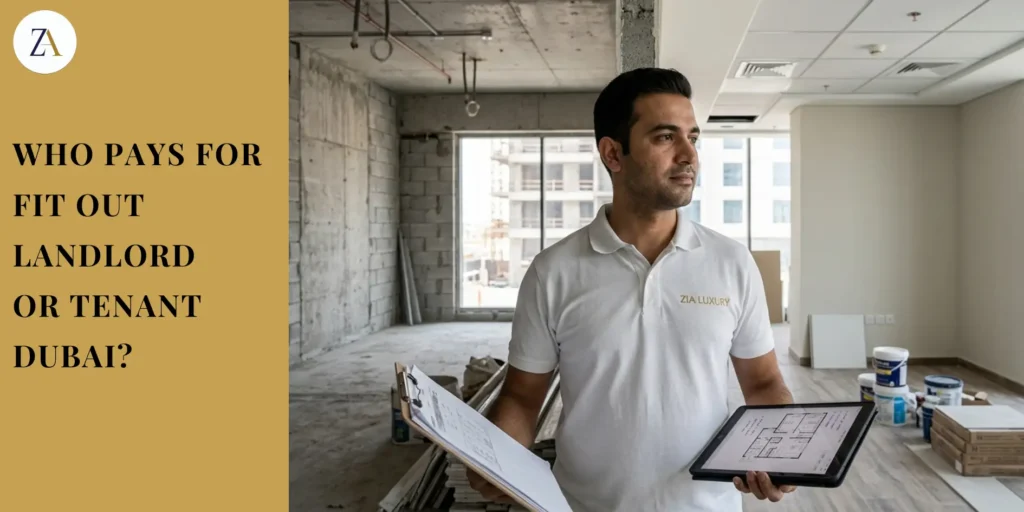
For anyone who is setting up their shop, office or restaurant in Dubai, one question comes to mind right off the bat; who is going to be responsible for the fit-out? A first question that comes to mind for anyone who decides to establish a shop, office or restaurant in Dubai is of course, who’s going to do the fit-out? Yes, it does seem like a fair question because the cost of fit-out in Dubai can amount to hundreds of thousands of dirhams, and the wrong fit-out selection at the time of signing a lease will have a huge effect on the budget.
Honestly, it depends upon the type of fit-out you’re referring to, your lease agreement, and the type of work you’re discussing. Unlike basic maintenance, there is no single law in place in Dubai that defines “landlords pay X, tenants pay Y” for fit-outs. Rather, fit-out cost allocation is a commercial transaction between the parties at an agreed rate based upon market practice and the tenancy agreement.
This guide explains in detail how fit-out payment works in Dubai – be it office, retail, restaurant or villas – and what you should expect and what you should negotiate before signing on the dotted line.
What Does "Fit-Out" Mean in Dubai Leasing?
Fit-out and maintenance are two different terms and are not the same. Although the terms “fit-out” and “maintenance” are sometimes used interchangeably, they are not the same.
- Maintenance is fixing what is already there, such as fixing a broken AC, a leaky pipe, or a broken socket.
- Renovations are generally completed structures (e.g., a villa) that are being improved or refreshed.
- Fit-out involves the installation and colouring of various features such as floor, partitions, ceiling, electrical points, plumbing connections, lighting, and finishes throughout an empty or partially completed commercial unit, to give it a usable layout and brand.
Fit-out is most often used in commercial real estate, particularly in offices, malls (retail units), restaurants and warehouse units where the landlord provides a “shell” and the tenant finishes the spaces with their brand and business.
The General Rule: Who Pays for What
Dubai’s commercial fit-out convention is usually split into two categories. This is the industry-standard way most landlords, developers, and fit-out contractors in Dubai describe the split.
Category A: Landlord's Responsibility
This is the base build the landlord typically delivers before-hand:
- Raised access flooring or a levelled concrete floor
- Suspended ceiling grid (without final tiles in many cases)
- Basic mechanical, electrical, and plumbing (MEP) infrastructure
- Fire and life safety systems
- Core lighting and power points
- Common area finishes
Category B: Tenant's Responsibility
This is the tenant’s bespoke interior work, layered on top of Category A:
- Partitioning and internal layout
- Flooring finishes (tiles, carpet, wood)
- Ceiling finishes and feature lighting
- Kitchen or bar installations (for F&B units)
- Branding, signage, and joinery
- IT cabling and AV systems
- Furniture and fixtures
In short, the landlord generally delivers a functional, safe shell. The tenant generally pays to make that shell look and work like their business.
Landlord Fit-Out Contributions (Incentives)
Here’s something many first-time tenants in Dubai don’t realize—landlords sometimes contribute cash or credit toward a tenant’s fit-out, especially for larger retail or office leases. This isn’t a legal requirement, but it’s a common commercial incentive used to attract quality tenants.
A landlord fit-out contribution can appear in a few forms:
- A lump sum credit toward the tenant’s Category B works
- A rent-free period specifically to cover the fit-out timeline
- Free provision of certain Category A upgrades (like additional AC capacity)
This is almost always negotiable, particularly in buildings competing for tenants, in slower leasing markets, or for anchor tenants that improve a building’s overall profile. Smaller retail units and shorter leases usually see less negotiating room here.
What's Usually Included in the Landlord's Base Package
If you’re moving into a commercial unit in Dubai, be sure to inquire with your landlord about exactly what “shell and core” or “warm shell” actually entails in your building, as it differs. Generally, expect:
- Structural walls, columns, and slabs
- Basic MEP up to the unit’s entry point
- Fire-rated doors and emergency exits
- External façade and windows
- Base building fire alarm and sprinkler systems
Anything beyond this list is almost always the tenant’s cost to complete.
What the Tenant Typically Pays For
Once you take handover, your fit-out contractor like Zia Luxury takes over from where the landlord’s shell ends. Tenant-funded work usually includes:
- Full interior design and space planning
- Internal partitions, false ceilings, and flooring
- Custom electrical and lighting layouts
- Plumbing extensions for kitchens, bathrooms, or pantries
- HVAC ducting beyond the base supply
- Signage/branding walls/joinery.
- Furniture, fixtures, and equipment (FF&E)
The most important element to be budgeted for in the leasing process is the tenant fit-out costs, at least in F&B and retail properties.
Approvals and NOCs Needed Before Starting Fit-Out
Most Dubai landlords require a fit-out bond (sometimes called a fit-out deposit or performance guarantee) before allowing any works to start. This is separate from your standard tenancy security deposit.
- It typically ranges from AED 10,000 to AED 50,000+, depending on unit size and building
- It’s refundable once the fit-out is completed without damage to common areas or the building’s core systems
- Some landlords also require proof of contractor insurance and a signed method statement before releasing site access
This bond protects the landlord’s building, not your interior—so it’s paid by the tenant regardless of who’s funding the actual fit-out works.
Rent-Free Fit-Out Period
Almost every serious commercial lease in Dubai includes a fit-out period during which rent is either waived or reduced. This is standard practice, not a special favour.
- Typical fit-out periods range from 30 to 90 days, depending on unit size and scope
- The clock usually starts once the landlord hands over vacant possession
- If your fit-out overruns this window, rent can begin accruing even before you open for business
Always get the exact number of rent-free days written into your lease agreement, not just verbally agreed—this is one of the most common sources of dispute later.
Villa Fit-Out vs Commercial Fit-Out: How Payment Differs
The ‘who pays’ issue differs when considering a leased commercial unit as opposed to a villa.
- Commercial fit-out (offices, retail, F&B): As per the above Category A/B split. The tenant is creating a space to their brand and needs and therefore is responsible for the fit-out unless otherwise negotiated.
- Fit-out or renovation of a villa (for owner/s): This is not a landlord-tenant discussion, but a discussion between the property owner and the property owner about fit-out or renovation. In this case, the “payer” is the owner of the home, and the project has been designed around personal preference as opposed to leases.
- Villa fit-out for renters: Most structural and fit-out changes will need the landlord’s permission before any can be done, and the tenant will often be responsible for paying the cost unless this is specified in writing.
It’s significant, as there is a lot of advice online that is a mix of commercial fit-out guidelines and residential tenancy law, further contributing to the confusion.
End of Lease: Reinstatement and Dilapidation Costs
Read the reinstatement clause of a commercial lease carefully. Most Dubai commercial leases require the tenant to return the unit to its original shell condition at the end of the tenancy—at the tenant’s cost.
- This means removing partitions, flooring, custom electrical work, and branding
- Reinstatement cost is a real budget line, not a formality—it can run into tens of thousands of dirhams for a mid-sized retail unit
- Certain landlords will allow the tenant to step down and the next tenant to assume the existing fit-out “as is. Some landlords will allow the next tenant to assume the existing fit-out “as is” if they wish to do so.
It can save a lot of money to agree to the reinstatement waiver or to limit the scope of reinstatement at the beginning of your lease.
How to Negotiate Fit-Out Costs With Your Landlord
Here are some simple ideas that actually have an impact on Dubai leasing:
- Request a fit-out contribution or rent-free extension, particularly if the unit is an anchor unit or is for a long-term lease.
- Get the exact scope of Category A works in writing, not just described verbally during viewings
- Negotiate the reinstatement clause before signing, not after
- Confirm who is responsible for delays caused by approval processing time
- Request the landlord’s approved fit-out contractor list early, since some buildings restrict who can work on-site
Common Mistakes to Avoid
- Assuming “shell and core” means the same thing in every building—it doesn’t
- Starting fit-out work before the developer or Civil Defence approval comes through
- Underestimating reinstatement costs at lease end
- Verbally agreeing to a rent-free fit-out period without it being written into the contract
- Hiring a contractor without DED and Dubai Municipality licensing
Frequently Asked Question
The tenant usually pays for their own interior fit-out (Category B works), while the landlord delivers the base shell (Category A). Some landlords offer a fit-out contribution or rent-free period as an incentive, but this is negotiated, not guaranteed by law.
No specific law sets fit-out cost-sharing the way tenancy law covers maintenance. It's governed by the commercial lease agreement, so the exact terms depend entirely on what both parties negotiate and sign.
A fit-out bond is a refundable deposit paid by the tenant to protect the building during construction work. It's separate from the security deposit and is returned once the fit-out is completed without damage.
It's not legally required, but it's standard market practice in Dubai commercial leasing. Always confirm the exact number of rent-free days in writing within the lease agreement, not just verbally.
In most cases, the tenant pays for reinstatement, returning the unit to its original shell condition. This clause should be checked and negotiated before signing the lease, as costs can be high.
Conclusion
Unlike regular maintenance, fit-out payment in Dubai is not a set rule but depends on the negotiations you make with your landlord before the work is done, the kind of work in question, and the type of lease you signed. In general, the landlord provides the shell and the tenant pays for the interior renovations; however, it is not uncommon for the landlord to provide contributions and rent-free periods for interior build-out, and these should be requested.
Whether you are furnishing a retail unit, office, restaurant, or upgrading the interior of a villa, it’s crucial to work with a fit-out partner that’s registered by the Dubai Municipality and endorsed by the Dubai Economic Development Corporation, or risk having your approvals, budget and time frame miscalculated — leading to a surprise cost.