

Villa Design Styles in Dubai: Modern, Arabic & Classic
- September 11, 2026
- Zia Luxury
- 4:30 am
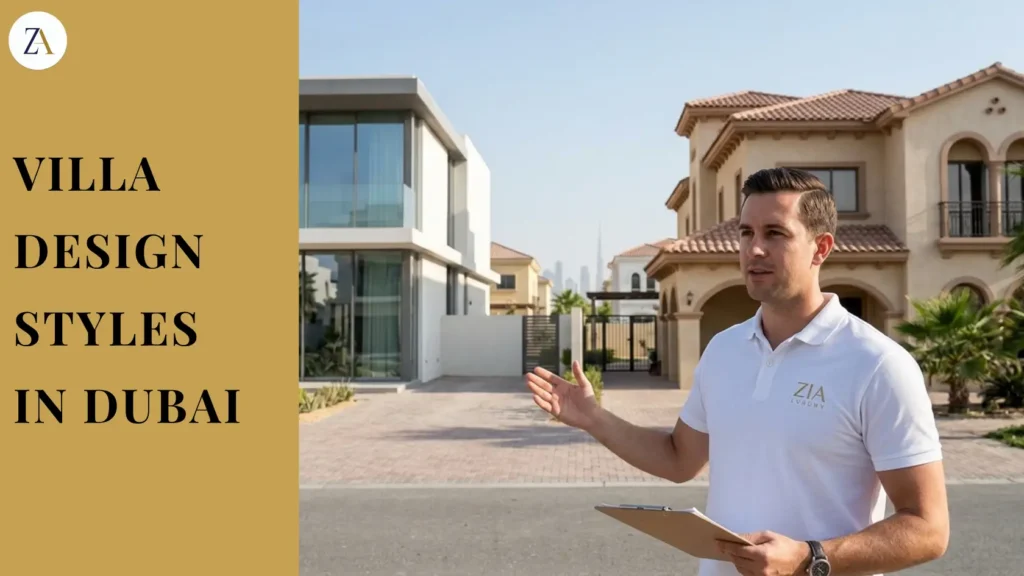
Ask three Dubai villa owners what “good villa design” means and you’ll get three different answers — one wants clean modern lines, another wants a majlis that feels unmistakably Arabic, and a third wants the timeless, symmetrical look of a classic estate. All three are valid. What matters is choosing a direction before the design brief is written, not halfway through the renovation.
This guide breaks down the three villa design directions most common in Dubai right now, how they differ in layout and materials, and what to check before you commit to one.
Why Villa Design Style Matters Before You Renovate
A villa’s style isn’t just paint colour and furniture — it drives the floor plan. A modern layout wants open-plan living and minimal partitions. An Arabic-influenced layout wants a distinct majlis, separated guest and family zones, and often a courtyard. A classic layout wants formal, symmetrical rooms with clearly defined boundaries. Picking the style first means the contractor can plan plumbing, structural openings and electrical routing around it, instead of retrofitting a look onto a layout that was never built for it.
Modern Villa Design in Dubai
Modern villa design dominates newer communities like Dubai Hills and Tilal Al Ghaf. It favours flat or low-pitched rooflines, floor-to-ceiling glazing, and a restrained material palette — usually two or three finishes repeated consistently rather than a dozen competing textures.
- Layout: open-plan living, dining and kitchen; minimal internal walls
- Colour palette: neutral base tones — greige, white, charcoal — with one accent material
- Signature materials: large-format porcelain, matte-finish stone, black or bronze metal detailing
- Best suited to: owners who entertain informally and prefer low-maintenance finishes
Arabic Villa Design
Arabic-influenced design hasn’t disappeared in favour of modern minimalism — if anything, it’s having a considered revival, particularly in majlis and formal reception areas. This isn’t the heavy, ornate Arabic style of a decade ago; today’s version leans on geometric mashrabiya screening, carved wood detail and rich but controlled colour, paired with modern comfort.
- Layout: a distinct majlis separated from the family living area, often with its own entrance
- Colour palette: deep jewel tones — emerald, burgundy, gold accents — against a neutral base
- Signature materials: carved wood panelling, mashrabiya screens, patterned tile inlays, brass fixtures
If a majlis is central to your brief, our dedicated guide to majlis design ideas covers seating layout, screening and lighting in more depth than we can here.
Classic Villa Design
Classic design in Dubai villas draws from European estate architecture — symmetrical facades, formal double-height entrances, and defined, separate rooms rather than open-plan zones. It photographs well and ages slowly, which is why it remains popular in Emirates Hills and Arabian Ranches.
- Layout: formal, room-by-room zoning with a defined entrance hall and staircase as a focal point
- Colour palette: ivory, cream and warm neutrals with gold or bronze trim
- Signature materials: polished marble flooring, ornate cornicing, crystal lighting fixtures
Modern vs Arabic vs Classic: Side-by-Side
Aspect | Modern | Arabic | Classic |
|---|---|---|---|
Floor plan | Open-plan, minimal walls | Zoned, separate majlis | Room-by-room, formal |
Ceiling height feel | Low-key, flat | Statement majlis ceiling | Double-height entrance |
Colour mood | Neutral, restrained | Jewel tones, gold accents | Ivory, cream, gold trim |
Best for | Informal entertaining | Formal guest hosting | Traditional family homes |
Materials Behind Each Style
Whichever direction you lean toward, the material choices underneath it make or break how the style holds up in Dubai’s climate. Our villa interior materials guide runs through flooring, wall finishes and fixtures by room, which is worth reading before finalising a design direction.
Renovating an Existing Villa Into a New Style
Switching a villa’s design direction — say, from classic to modern — is achievable without a full rebuild in most cases, but it needs careful sequencing of demolition, structural checks and finishing trades. Our villa renovation guide walks through how that process is typically staged.
Do You Need Approval to Change Your Villa's Design?
Interior style changes — flooring, colour, fixed furniture — generally don’t need external approval. But if the new design involves extending a footprint, adding a majlis wing, or altering the facade, Dubai Municipality approval is required before work starts. Our breakdown of the villa extension permit process in Dubai explains what triggers a permit and how long approval typically takes.
See These Styles in Real Dubai Villas
Photos rarely capture how a style actually feels in a room at full scale. Browse our portfolio for completed modern, Arabic and classic villa projects across Palm Jumeirah, Emirates Hills and Dubai Hills.
Frequently Asked Question
Yes — it's one of the most common briefs we receive. A typical split keeps the majlis and formal reception areas Arabic-influenced, while family living spaces, bedrooms and the kitchen lean modern.
Classic design tends to cost more per square metre due to the volume of decorative plasterwork, marble flooring and bespoke joinery. Modern design is generally the most cost-efficient because it relies on fewer, larger-format materials.
A cosmetic style change across a mid-size villa typically takes 8–14 weeks. A renovation involving layout changes or an extension can run 16–24 weeks depending on approvals.
Most established Dubai fit-out companies offer design and build under one contract, which avoids the coordination gaps that happen when a separate designer and contractor aren't working from the same drawings.
Conclusion
Whether you’re drawn to clean modern lines, a considered Arabic majlis, or classic formal rooms, Zia Luxury Interior Fitout has delivered all three across Dubai’s villa communities since 2019. Book a free consultation and we’ll help you settle on a direction before drawings even start.